


Rhinoplasty

Located right at the center of our face, the nose not only determines the fundamental characteristic expression of our appearance but also serves as the starting point for our most vital function: breathing. In aesthetic surgery and medical literature, the procedure known as Rhinoplasty is a comprehensive operation where surgical art meets medical science, aiming to create a flawless balance both visually and functionally.
In modern medical approaches, our core philosophy is to build a natural nasal profile that shows no external signs of surgical intervention, perfectly harmonizes with the “golden ratio” of the face, and most importantly, allows the patient to breathe effortlessly. Instead of “artificial” or “done” looking noses that do not belong to your face, our main goal is to achieve permanent results that preserve your unique characteristics, support facial symmetry, and enhance your quality of life. A successful rhinoplasty operation not only improves a person’s reflection in the mirror but also provides a highly positive momentum in their social and professional life with increased self-confidence.
In Which Situations is Rhinoplasty Performed?
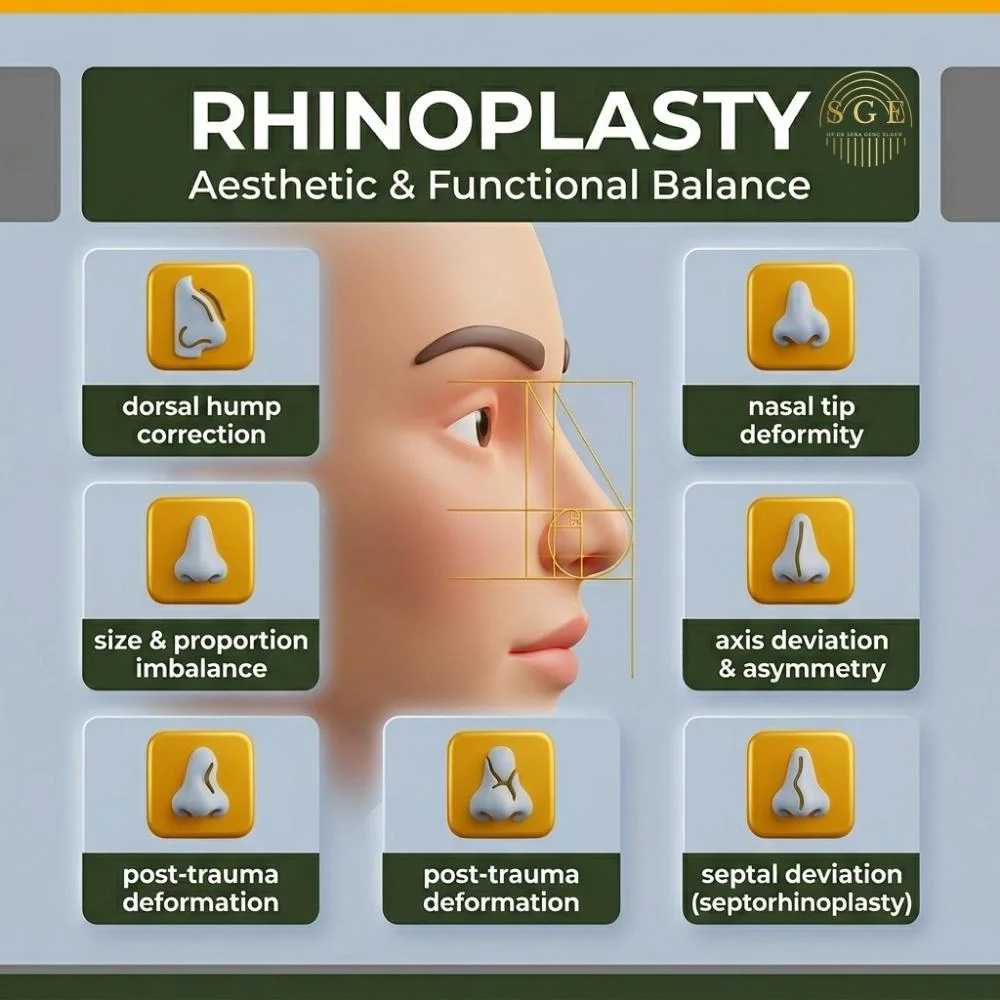
Although requests for rhinoplasty usually begin with aesthetic concerns felt when looking in the mirror, the background of the process often involves anatomical and functional problems that reduce the quality of life. For the patients who apply to our clinic, we resolve aesthetic expectations and breathing problems (functional repair) simultaneously. The most common conditions requiring intervention are:
- Dorsal Hump Structure: Excess bone and cartilage on the nasal bridge, usually developing due to genetic factors or past trauma. It is one of the primary factors affecting the profile view.
- Nasal Tip Deformities: Situations where the tip of the nose is lower (drooping) than it should be, appears overly wide and fleshy (bulbous tip), has an asymmetrical stance, or drops significantly when smiling.
- Size and Proportion Incompatibilities: A condition where the nose remains too large, too long, or too small in form compared to the rest of the facial organs (forehead, chin, cheeks).
- Asymmetry, Axis Deviation, and Crookedness: The axis of the nose bending to the right or left. This condition, which is mostly congenital, can become even more pronounced with growth spurts during puberty in some cases.
- Post-Traumatic Deformities: Fractures in the nasal skeleton occurring as a result of traumatic events such as traffic accidents, falls, or sports injuries, and the resulting permanent deformities.
- Functional Problems (Septorhinoplasty): A condition where the cartilage/bone wall (septum) passing right through the middle of the nose and dividing it into two cavities is crooked (deviation). This is frequently accompanied by the enlargement of the nasal conchae (concha hypertrophy). In these patients, symptoms that deeply affect the quality of life, such as sleeping with an open mouth, severe snoring, sleep apnea, decreased effort capacity, and chronic fatigue, are eliminated.
Are You a Suitable Candidate for Rhinoplasty?
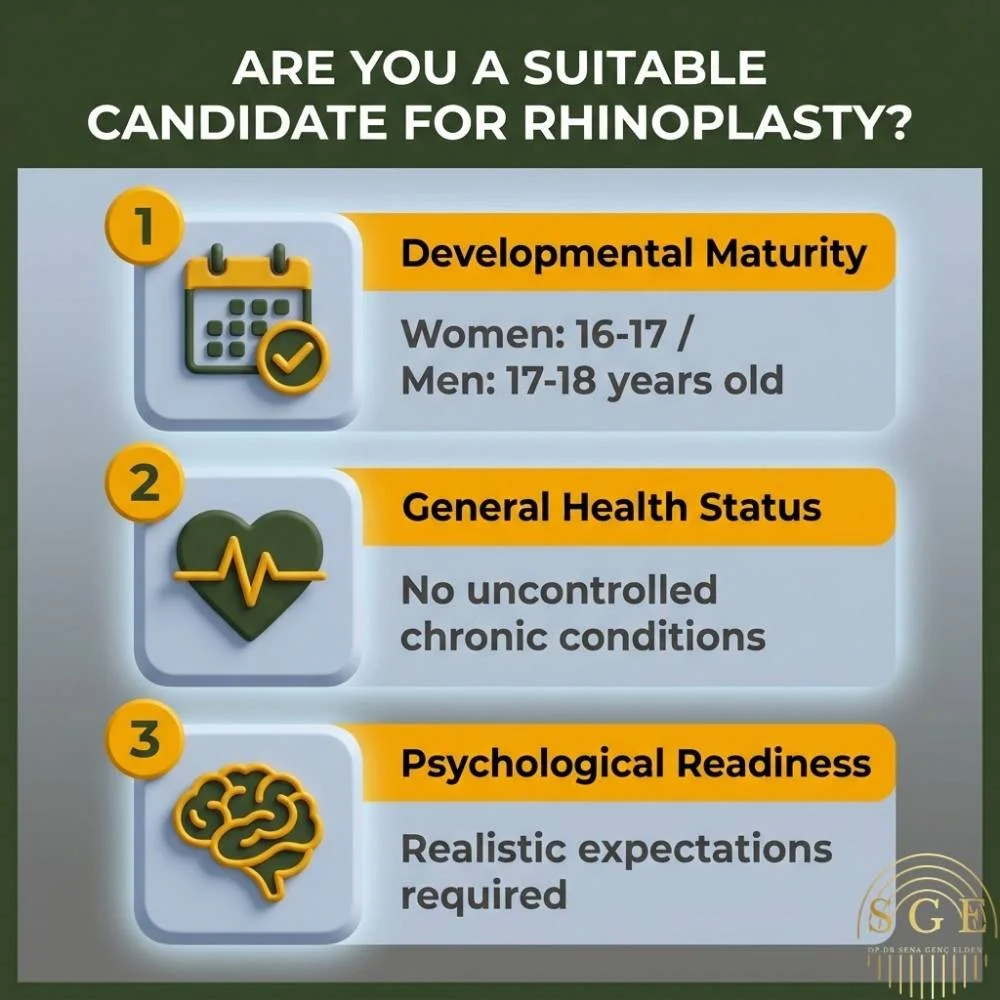
In order for a rhinoplasty operation to be performed safely, certain medical and physiological criteria must be met:
Developmental Maturity: The patient must have completed bone and cartilage development; this is the most fundamental medical requirement. This process is generally completed around the ages of 16-17 in women and 17-18 in men. While the globally accepted safe lower limit is 18 years, special evaluations can be made in severe trauma cases that completely prevent breathing.
General Health Status: The patient should not have a chronic, uncontrolled condition (such as advanced heart problems, severe bleeding disorders, etc.) that would prevent them from receiving general anesthesia.
Psychological Readiness and Realistic Expectations: Rhinoplasty does not completely transform your face into someone else’s; it reveals the best and most harmonious version of your current structure. Transparent communication between the patient and the surgeon during this process, and ensuring that expectations regarding the surgical results align with anatomical realities, is the key to success.
Modern Rhinoplasty Techniques Used
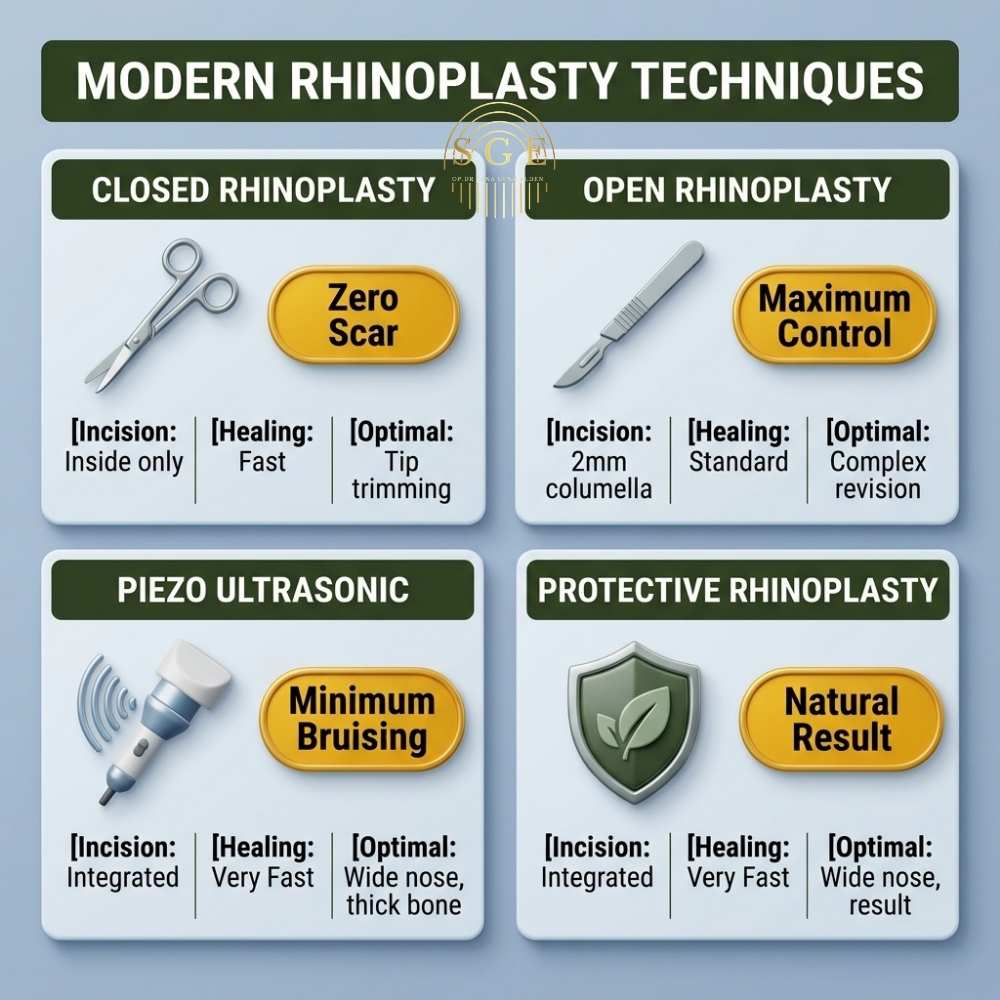
There is no “one-size-fits-all template” in rhinoplasty. Every person’s skin structure (thick/thin), cartilage memory, and bone anatomy are as unique as a fingerprint. In surgical planning, the most up-to-date and reliable techniques are used according to the patient’s needs:
1. Closed Rhinoplasty (Scarless Nose Job)
This is the technique where all surgical incisions are made entirely inside the nostrils (over the mucosa), leaving no visible external scars. Advantages: Since the ligaments and support structures at the nasal tip are less disrupted, tissue trauma is minimized. This allows the postoperative edema (swelling) to subside faster and shortens the recovery process.
2. Open Rhinoplasty
It is based on the principle of lifting the nasal skin over the skeleton with an inverted “V” shaped incision of about 2-3 millimeters made on the tissue dividing the nostrils, called the “columella.” Advantages: The surgeon sees the entire bone, cartilage, and septum structure of the nose directly, down to the finest detail, with the naked eye. It provides maximum control in situations requiring millimeter-precision symmetry calculations, in severe deviations, and in challenging revision (second/third surgery) cases requiring cartilage grafts. The incision scar fades within months, blending with the skin color and becoming unnoticeable.
3. Piezo (Ultrasonic) Rhinoplasty Technique
A high-tech sound wave system that has replaced the mechanical tools (hammers, chisels, and rasps) used for bone shaping in past years. Advantages: The Piezo device has smart tissue selectivity; meaning it only shapes hard bone tissue and does not harm surrounding soft tissues, capillaries, and nerves. Thanks to this revolutionary technology, the risk of feared postoperative bruising, under-eye darkening, and severe swelling (edema) is almost non-existent.
4. Preservation Rhinoplasty
This is the protective technique preferred most in recent years, performed without disrupting the natural anatomical structure on the nasal bridge (by lowering the hump from below rather than rasping it from the top). Since the natural nasal dorsum aesthetic is preserved, the results are extremely natural, and recovery is incredibly fast.
Comparative Table: Modern Rhinoplasty Techniques
The table below summarizes the fundamental differences of the methods applied in our clinic:
| Technique | Incision / Scar Status | Vision and Control | Recovery Speed | Best Suited For |
| Open Rhinoplasty | Very thin 2mm scar on columella, fades over time | Maximum surgical dominance and vision | Standard (6-12 Months) | Severe deviations, asymmetries, complex revisions |
| Closed Rhinoplasty | Only inside the nose (Zero external scar) | More limited vision area for the surgeon | Fast | Nasal tip issues, standard hump reduction |
| Piezo (Ultrasonic) | Can be integrated with Closed or Open method | Millimetric bone shaping with sound waves | Very Fast (Minimum bruising) | Thick bone structure, wide nose narrowing procedures |
| Preservation | Can be integrated with Closed or Open method | Nasal bridge anatomy is completely preserved | Very Fast | Patients who do not want to alter natural dorsum structure |
Step-by-Step Treatment and Operation Process
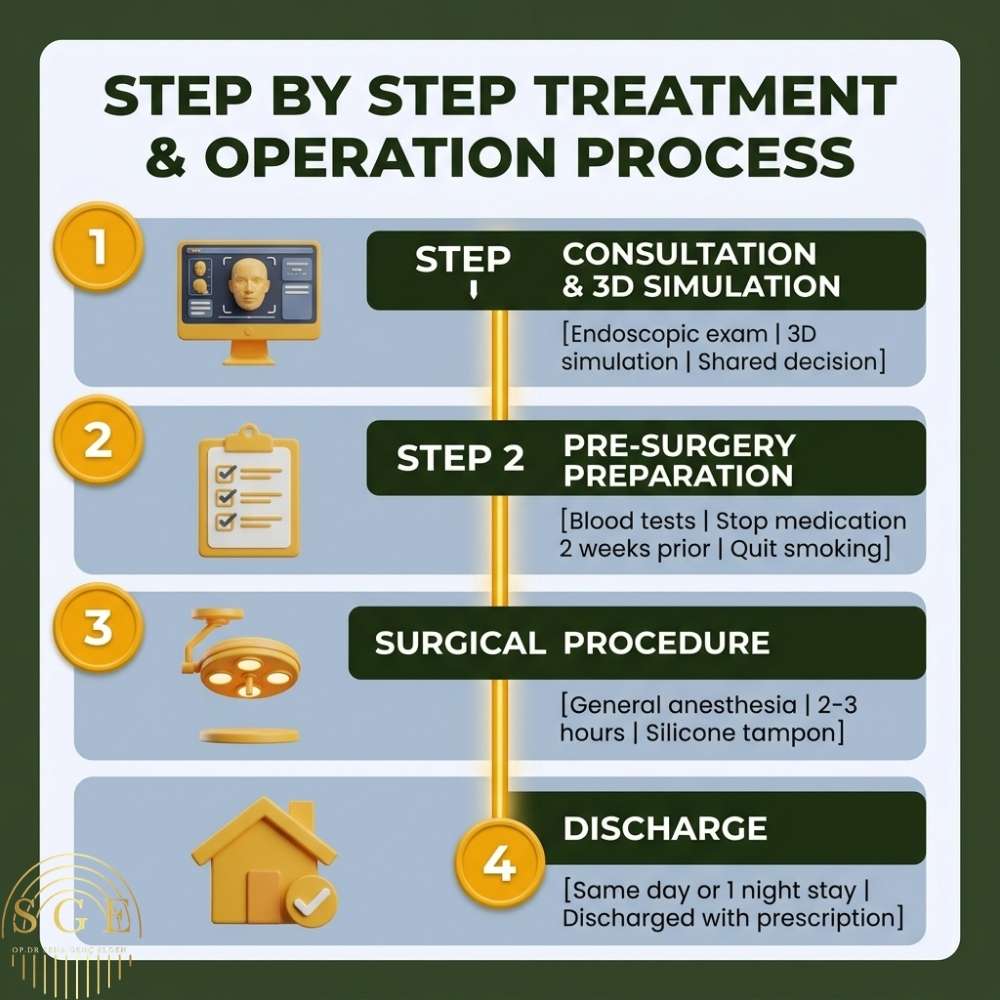
1. Detailed Consultation and 3D Design Simulation: The most important stage of the process is listening to the patient. With a detailed endoscopic ENT examination performed in the clinic, internal nasal deviations and concha enlargements are identified. Photographs are taken from different angles in a professional studio environment. Using special 3D simulation software, the probable shape your nose will take after the operation, harmonized with your facial features, is integrated into your face and shown to you. A joint aesthetic decision is reached.
2. Pre-Operative Preparation Period: Before the planned operation date, detailed blood tests and an anesthesia specialist examination are performed. At least 2 weeks before the surgery, blood thinners like aspirin, all herbal teas including green tea, and vitamin supplements must be stopped. Smoking, which severely impairs tissue healing by reducing blood oxygenation, must be quit weeks before the surgery.
3. Surgical Intervention and Hospital Stay: The operation is performed in fully equipped hospital conditions, accompanied by an expert anesthesia team, and under general anesthesia. Depending on the scope of the planned procedure (aesthetic only, or including functional repair), the surgery takes an average of 2 to 3 hours. At the end of the procedure, a thermal splint is placed on the outside to protect the nasal structure, and modern silicone sheet splints with air channels, which do not stick and allow the patient to breathe as soon as they wake up, are placed inside. Old-generation cloth tampons are absolutely no longer used.
4. Discharge Phase: Our patients rest in their private rooms on the day of surgery. Provided no complications develop, they are usually discharged the same evening or the next morning with prescribed medications after being hosted in the hospital for 1 night for comfort.
What Awaits You During the Recovery Process?
Rhinoplasty recovery is akin to running a marathon; it requires patience and time.
- First 48 Hours: During this period, slight pinkness around the eyes, swelling, and minor oozing bleeding (depending on your skin sensitivity and the technique applied) are perfectly normal. Contrary to popular belief, pain is almost non-existent; what is felt is more of a sense of fullness and pressure inside the nose. Simple painkillers are sufficient. Regular ice application and sleeping with the head elevated on two pillows prevent edema from increasing.
- End of the 1st Week: During the first check-up at the clinic, the thermal splint on the nasal bridge and the channeled silicone splints inside the nose are removed. This process takes only a few seconds and is completely painless. You can see your nose for the first time when the splint comes off, but at this stage, the nose will still be edematous and more swollen than normal. Thin skin-colored tapes are applied over your nose.
- First 1 Month Period: Approximately 70-80% of the gross swelling (edema) caused by surgical trauma is expelled from the body during this first one-month period. The new form and curves of your nose begin to become distinct. However, a slight numbness and hardness felt at the nasal tip when touched will continue. Heavy sports and wearing glasses should be strictly avoided during this period.
- 6 Months – 1 Year (Final Result): It takes 6 months to 1 year for the nasal skin to fully adhere to the bone and cartilage skeleton, for millimetric edema to be resolved, and for the nasal tip to regain its natural softness. In patients with thick (oily) skin types, the complete maturation of tissues can take up to 1.5 to 2 years.
Frequently Asked Questions (FAQ)
You can quickly access answers to the most common questions and find detailed information about the treatment process here.
Is Rhinoplasty (Nose Job) surgery a very painful procedure?
Contrary to common perception, thanks to modern surgical techniques (especially Piezo surgery), pain after rhinoplasty is virtually non-existent. Our patients describe the process not so much as painful, but rather as a feeling of fullness and congestion in their nose for the first few days (like having a cold). The standard analgesics (painkillers) provided will ensure you get through this process very comfortably.
Does it hurt when the tampons placed after surgery are removed?
Absolutely not. The days of using meters-long cloth tampons that stick to the tissue and cause bleeding when removed are history. Today, we use non-stick, grooved silicone splints that you can breathe through. Removing them is a painless procedure that takes only a few seconds and slides right out.
When can I wear glasses after rhinoplasty?
In patients whose bone structure has been altered, it is crucial not to apply pressure to the nasal bridge until the bones have completely healed. Therefore, wearing prescription glasses or sunglasses is not recommended for the first 2 to 3 months following the operation. It is advisable to use contact lenses during this period.
When can I return to work/social life after surgery?
Generally, our patients are able to return to their desk jobs and social lives on the 7th day of the operation (after the splint and internal silicone splints are removed) with only thin tapes on their noses. Slight yellowing that may occur on the skin can easily be concealed with foundation or concealers during this time.
Is it possible to have only my nasal tip done (Tipplasty)?
Yes. If the patient has no problems with the nasal bridge (hump), the bone structure is straight, and the issue is solely a drooping, wide, or asymmetrical nasal tip, “Tipplasty” (Nasal tip aesthetic) can be performed using only cartilage intervention without touching the bones at all. The recovery time for this procedure is much shorter than classic rhinoplasty.

Op. Dr. Sena Genç Elden
Otolaryngologist (ENT Specialist)
Op. Dr. Sena Genç Elden, following her medical and residency training, completed Facial Plastic Surgery School and gained experience as a chief physician; she possesses national and international clinical expertise alongside world-renowned surgeons and currently continues her practice at her own private clinic in Serdivan, Sakarya.
Take the First Step for a New Beginning!
Address:
Contact Us
Mail: info@drsenagencelden.com
Discover the Flawless Balance at the Center of Your Face
Start your journey of transformation today to take a deep, comfortable breath and achieve a natural look that will make you say “I’m glad I did it” every time you look in the mirror. To plan the most suitable surgical approach for your unique facial features (golden ratio), view potential results with 3D simulations, and have all your questions answered transparently, schedule a preliminary consultation with our expert team right now.
References and Scientific Basis
Ensuring our patients have access to the most accurate and reliable scientific information is one of our clinic’s fundamental principles. The medical data in this guide has been prepared based on the protocols of the following internationally respected health organizations:
International Clinical Guidelines;
- Mayo Clinic: Rhinoplasty Overview, Risks, and Results
- Cleveland Clinic: Rhinoplasty (Nose Job) Procedure Details and Recovery
- American Society of Plastic Surgeons (ASPS): Cosmetic Procedures – Rhinoplasty Candidates and Techniques
Academic Publications (Surgeon Dr. Sena Genç Elden) ;
- Elden, S. G., et al. (2024). Diagnostic Value of the Video Head Impulse Test in Patients with Vertigo: Can It Be Used as a Screening Tool? ResearchGate
- Elden, S. G., & Güven, E. M. The Effect of Hypericum Perforatum L. (St. John’s Wort) on Prevention of Myringosclerosis After Myringotomy. ResearchGate
- Genç Elden, S., & Demir, D. Investigation of diclofenac sodium’s ototoxic and neurotoxic effects on the rat model. ResearchGate