


Endoscopic Sinus Surgery (FESS)

In the human skull, the air-filled bone cavities located in the forehead, cheeks, around the eyes, and in the nasal region are called sinuses. Sinuses have extremely critical functions, such as warming and moisturizing the air we breathe, adjusting the resonance of our voice, and lightening the weight of the skull. The inner surface of these cavities is lined with a membrane (mucosa) that continuously produces mucus (secretions). In a healthy system, this mucus drains through narrow, millimetric channels called “ostia” into the nasal cavity and from there into the throat.
However, if these narrow drainage channels become blocked due to anatomical narrowness, persistent allergies, frequent infections, or nasal polyps, the mucus inside the sinuses cannot be expelled. These airless, dark cavities filled with fluid turn into a perfect breeding ground for bacteria and fungi. This condition, referred to in medical literature as Chronic Sinusitis, manifests itself with symptoms that deeply shake the quality of life, such as a severe feeling of pressure in the face, persistent headaches, post-nasal drip, loss of the sense of smell, and constant fatigue.
At this point, where medical treatments and antibiotics are no longer sufficient, Functional Endoscopic Sinus Surgery (FESS), the most modern and gold standard face of ENT surgery, comes into play. FESS is a flawless and permanent treatment method that restores the natural ventilation of the sinuses by opening blocked channels, performed entirely through the nostrils with high-resolution cameras and micro-surgical instruments, without making any incisions on your face.
In Which Situations is Endoscopic Sinus Surgery (FESS) Applied?
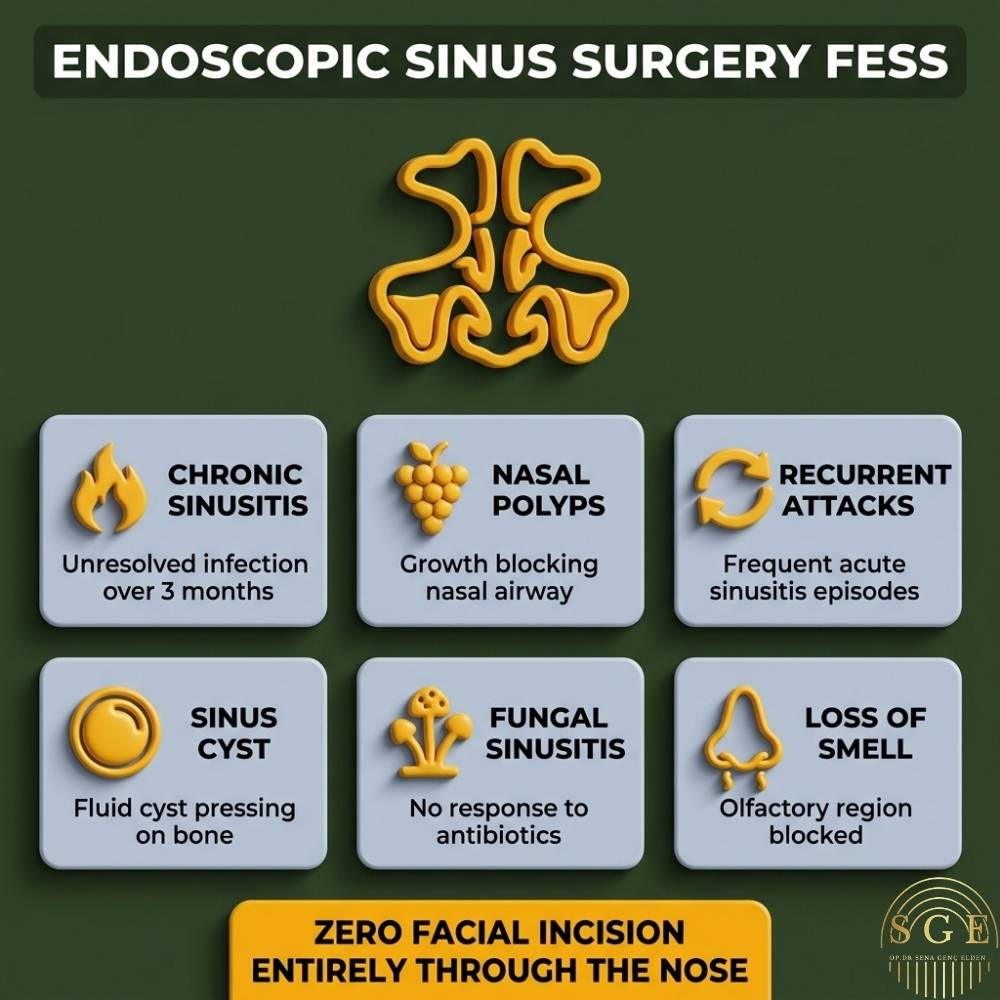
Endoscopic sinus surgery is not applied for a simple winter cold or acute sinusitis attacks. For a surgical decision to be made, the disease must have become “chronic” or created a mechanical blockage. The most common situations where we apply the FESS procedure in our clinic are:
- Chronic Sinusitis: Sinus infections characterized by facial pain and purulent discharge that last longer than 12 weeks (3 months) and do not heal despite appropriate antibiotics, allergy medications, and cortisone sprays.
- Nasal Polyps: Grape-like, benign fleshy growths originating from the sinus mucosa and hanging into the nasal cavity as a result of allergies or chronic inflammation, which completely block breathing and the sense of smell.
- Recurrent Acute Sinusitis: Acute attacks that recur very frequently within a year and force the patient to constantly use antibiotics.
- Sinus Mucoceles (Cysts): Fluid-filled cysts that grow inside the sinus as a result of the complete blockage of sinus channels, posing a danger by putting pressure on surrounding bone tissues (towards the eye or brain).
- Fungal Sinusitis: Fungal infections that generally grow in people with weakened immune systems or in closed sinus cavities, do not respond to antibiotics, and must be completely cleaned surgically.
- Olfactory Disorders (Anosmia/Hyposmia): The condition where odors cannot reach the nerve endings due to the olfactory cleft being closed by polyps or chronic inflammation.
The Modern FESS Approach: Why “Functional”?
The word “Functional” at the beginning of the FESS procedure summarizes the entire philosophy of this surgery. In traditional sinus surgeries performed in the past, an incision was made under the patient’s lip, the inside of the sinuses was completely scraped, and all healthy/unhealthy tissues were removed. However, this disrupted the natural physiology of the sinuses.
In Modern Functional Endoscopic Sinus Surgery, the goal is not to destroy tissues, but to repair them. Only the parts that cause the disease and create blockage are millimetrically cleaned. The natural drainage doors (ostia) of the sinuses are widened. The healthy mucosal membrane inside is never touched. The sinus, whose ventilation is provided and doors are opened, rapidly regains its self-healing capacity (mucociliary clearance) and returns to its former healthy days.

Advanced Technologies Used During Surgery
Sinus anatomy neighbors some of the most critical organs of the human body, such as the brain lining (skull base), the carotid artery, and the eye socket (orbit), separated only by paper-thin bone walls. Therefore, FESS requires tremendous anatomical knowledge and advanced technology. In our clinic, the following technologies are used to maximize operation safety and patient comfort:
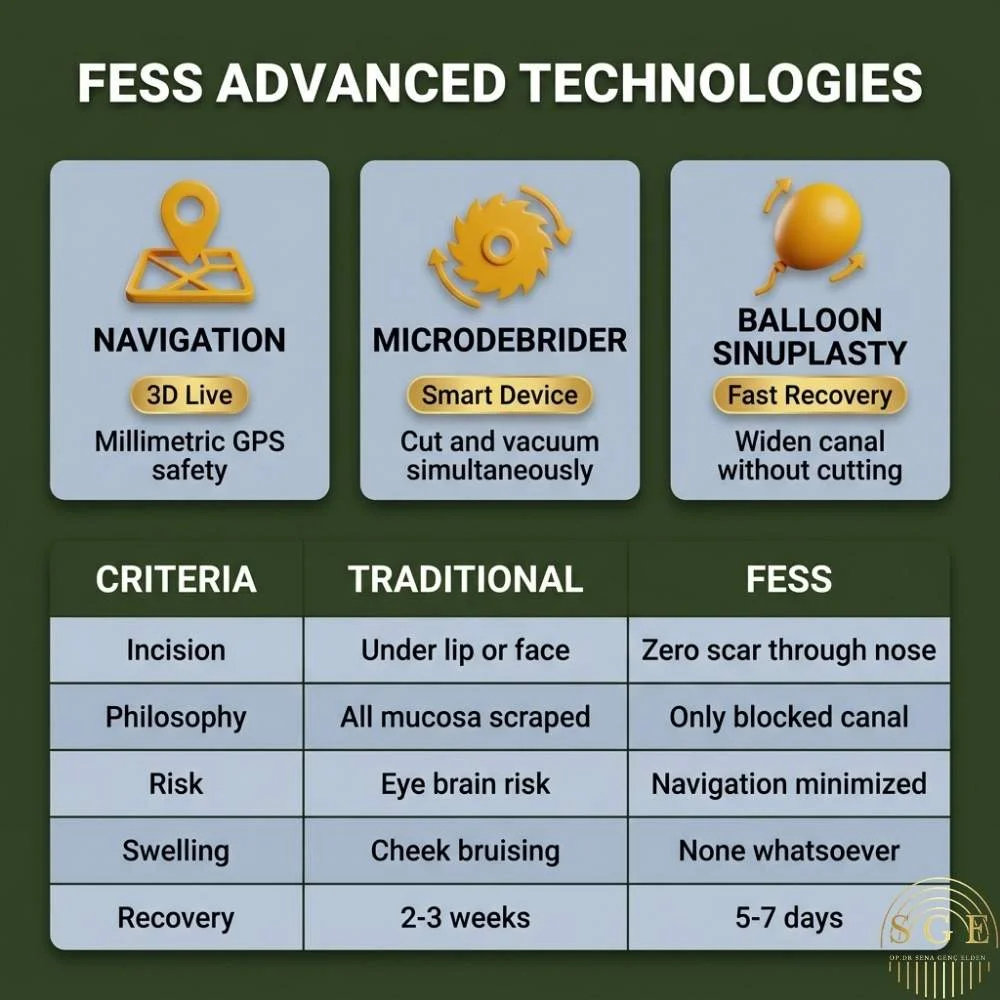
- Surgical Navigation System: It works exactly like a GPS system in vehicles. The patient’s tomography images are loaded into the system during the surgery, and the surgeon watches live in 3D on the screen exactly how many millimeters away their instrument is from the brain or the eye. It is a vital safety shield, especially in revision cases (patients who have had unsuccessful surgeries before) and extensive polyp patients.
- Microdebrider (Shaver) Technology: Smart devices that clean the tissue by simultaneously cutting and vacuuming (grinding) it with a tip rotating thousands of times per second, rather than tearing the polyps inside the nose. It does not harm healthy tissue and keeps bleeding to a minimum.
- Balloon Sinuplasty Integration: In necessary cases, the inside of narrowed sinus channels (especially frontal sinuses) is inflated and widened with a special balloon. Since no tissue is cut, recovery is incredibly fast.
Comparative Table: Traditional Sinus Surgery vs. FESS
| Comparison Criteria | Traditional (Open/Caldwell-Luc) Surgery | Modern FESS (Endoscopic) Surgery |
| Incision Site and External Scar | Incision under the lip (inside the mouth) or on the face | Zero Scar. Only through the nostrils with an endoscope |
| Surgical Philosophy | Blind scraping of the entire sinus mucosa | Widening only blocked channels, preserving healthy tissue |
| Complication Risk | Relatively higher risk of damaging surrounding organs (eye/brain) | Risk is minimal with camera vision and Navigation system |
| Facial Swelling and Bruising | Significant cheek swelling and bruising post-surgery | Absolutely no swelling or bruising occurs |
| Recovery and Return to Work | Long and painful (Approximately 2-3 weeks) | Very fast (Generally 5-7 days) |
Step-by-Step Treatment and Recovery Process
Despite its high technological equipment, FESS is a surgery that patients get through quite comfortably.
1. Pre-Operative Preparation: To confirm the diagnosis and draw a roadmap, a Paranasal Sinus CT (Computed Tomography) Scan must be taken. This tomography is the map the surgeon will use during the operation. In the days before the surgery, blood-thinning medications and additional supplements must be stopped against the risk of bleeding, unless otherwise specified by the physician.
2. Surgical Procedure Phase: The surgery is performed under general anesthesia (putting the patient to sleep) for patient comfort and complete airway safety. Depending on the number of sinuses to be intervened in and polyp density, the operation can take between 1 to 3 hours. At the end of the operation, old-style meters-long cotton/cloth tampons that cause pain when removed are absolutely not used. Instead, special self-dissolving gels or grooved silicone splints that allow the patient to breathe and slide out easily during removal are placed inside the nose.
3. Discharge from the Hospital: Our patients are usually hosted in the hospital on the night of the surgery as a precaution, and they are discharged the next morning after their checks are made. Since there is no external incision, there are no bandages, swelling, or bruising on the patient’s face.
4. Home Care and the Golden Rule: “Sinus Rinses” The success of the recovery process is determined by the patient’s home care as much as by the surgeon’s mastery. For the first 2-3 weeks following the surgery, blood clots and crusting will form inside the sinuses. Feeling nasal congestion (as if having a heavy flu) during this period is perfectly normal. It is mandatory for the patient to wash their nose with pressurized ocean waters or high-volume sinus rinse kits (saline solution) at least 4-5 times a day. These rinses prevent the freshly opened sinus channels from closing again with crusts. Most patients are able to return to their desk jobs within 5-7 days after surgery. Full cellular healing and perfect ventilation of the sinuses take 4 to 6 weeks.

Frequently Asked Questions (FAQ)
You can quickly access answers to the most common questions and find detailed information about the treatment process here.
Will I have swelling or bruising on my face after endoscopic sinus surgery?
Absolutely not. Because all surgical procedures in FESS surgery are performed from inside the nostrils and no external intervention is made on the facial bones (like breaking/filing in rhinoplasty), there is no bruising, swelling, or discoloration around the eyes or cheeks. Someone looking from the outside can never tell that you had surgery.
Do sinusitis or polyps recur after surgery?
The success rate of FESS surgery performed for chronic sinusitis is over 90%. Sinusitis linked solely to anatomical narrowness, in particular, does not recur. However, if the disease is caused by very dense Nasal Polyps and allergic asthma-based reactions, there is a 15-20% chance that polypoid tissues may grow back over the years. To prevent this recurrence, it is of vital importance to use cortisone sprays and allergy treatments prescribed by your doctor as a maintenance therapy without interruption in the post-operative period.
Will a tampon be placed in my nose during surgery? Does it hurt a lot when it's removed?
With the advancement of medical technology, the “pain of tampon removal” that patients fear most is completely history. In most FESS surgeries, herbal hemostatic agents or gels that are absorbed (dissolved) by the body itself are used to stop bleeding. If a deviation in the nasal septum has also been corrected, very thin and smooth silicone sheets through which you can breathe are placed. Since these do not stick to the tissue, their removal is a painless procedure taking only 1-2 seconds.
When will my sense of smell return?
If your loss of smell (anosmia) is caused by polyps completely blocking your nose or severe sinus inflammation blocking olfactory cells, your sense of smell will dramatically and rapidly return as the blockage opens and the edema subsides (usually within 2-3 weeks) after the surgery.
Can this surgery be performed at the same time as nasal concha and cartilage deviation surgery?
Yes, it is mostly done together. Septum Deviation and excessive growth of the lower nasal conchae (Concha Hypertrophy) are frequently among the factors leading to chronic sinusitis. In a single anesthesia session, the deviation is corrected, the nasal conchae are reduced, and the sinuses are cleaned. In this way, the patient is freed from all functional problems of the nose at once.

Op. Dr. Sena Genç Elden
Otolaryngologist (ENT Specialist)
Op. Dr. Sena Genç Elden, following her medical and residency training, completed Facial Plastic Surgery School and gained experience as a chief physician; she possesses national and international clinical expertise alongside world-renowned surgeons and currently continues her practice at her own private clinic in Serdivan, Sakarya.
Take the First Step for a New Beginning!
Address:
Contact Us
Mail: info@drsenagencelden.com
Get Rid of Pressure, Pain, and Congestion, and Breathe Freely
That endless heavy feeling of pressure on your face, persistent headaches, congestion that interrupts your sleep, and the necessity to constantly use antibiotics are not your destiny. Restoring your sinuses to their natural health with the most advanced surgical technologies accepted globally and millimetric navigation safety is our field of expertise. To step into quality sleep, the scents you’ve forgotten, and a clean breath that will restore your life energy, you can schedule your detailed tomographic analysis and preliminary consultation appointment with our expert team immediately.
References and Scientific Basis
It is the fundamental philosophy of our clinic that our patients have transparent access to the most up-to-date and reliable scientific data when making their medical decisions. The anatomical information and indications in this guide have been compiled based on the guidelines of the following international ear, nose, and throat authorities:
International Clinical Guidelines;
Mayo Clinic: Chronic Sinusitis – Symptoms, Causes, and FESS Treatment.
American Academy of Otolaryngology-Head and Neck Surgery (AAO-HNS): Endoscopic Sinus Surgery – Patient Information.
Cleveland Clinic: Functional Endoscopic Sinus Surgery (FESS) Procedure Details.
Academic Publications (Surgeon Dr. Sena Genç Elden) ;
- Elden, S. G., et al. (2024). Diagnostic Value of the Video Head Impulse Test in Patients with Vertigo: Can It Be Used as a Screening Tool? ResearchGate
- Elden, S. G., & Güven, E. M. The Effect of Hypericum Perforatum L. (St. John’s Wort) on Prevention of Myringosclerosis After Myringotomy. ResearchGate
- Genç Elden, S., & Demir, D. Investigation of diclofenac sodium’s ototoxic and neurotoxic effects on the rat model. ResearchGate