


Adenoid and Tonsil Diseases
The human body is equipped with a perfect defense mechanism against external infections. The tonsils located at the back of our throat and the adenoids located at the very back of the nasal cavity (in the nasopharynx) are the first defense outposts that catch viruses and bacteria trying to enter our body through the respiratory and digestive tracts. These lymphoid tissue structures are highly active, especially during early childhood (ages 2-6) when the immune system is still developing, and they play a role in antibody production.
However, in some cases, these “defense outposts” lose their function and, instead of protecting the body, turn into sources of disease where microbes nest and produce chronic infections. Excessive enlargement (hypertrophy) of the tonsils and adenoids due to frequent infections or genetic predispositions leads to permanent problems in children such as nasal congestion, sleeping with an open mouth, snoring, sleep apnea, hearing loss, and even jaw-facial developmental disorders. In adults, it manifests as chronic sore throats, bad breath, and swallowing difficulties. Thanks to modern medicine and advanced ENT surgery, adenoid and tonsil diseases can be treated extremely comfortably and permanently for both children and adults.
Adenoid Hypertrophy and Its Symptoms
Unlike tonsils, adenoids are a tissue that cannot be seen from the outside when the mouth is opened; they are located at the very back of the nose, in the nasopharynx cavity. They are generally expected to start shrinking on their own after the age of 7-8 and disappear during adolescence. However, when they grow excessively during early childhood and block the airway behind the nose, they pave the way for serious health problems.
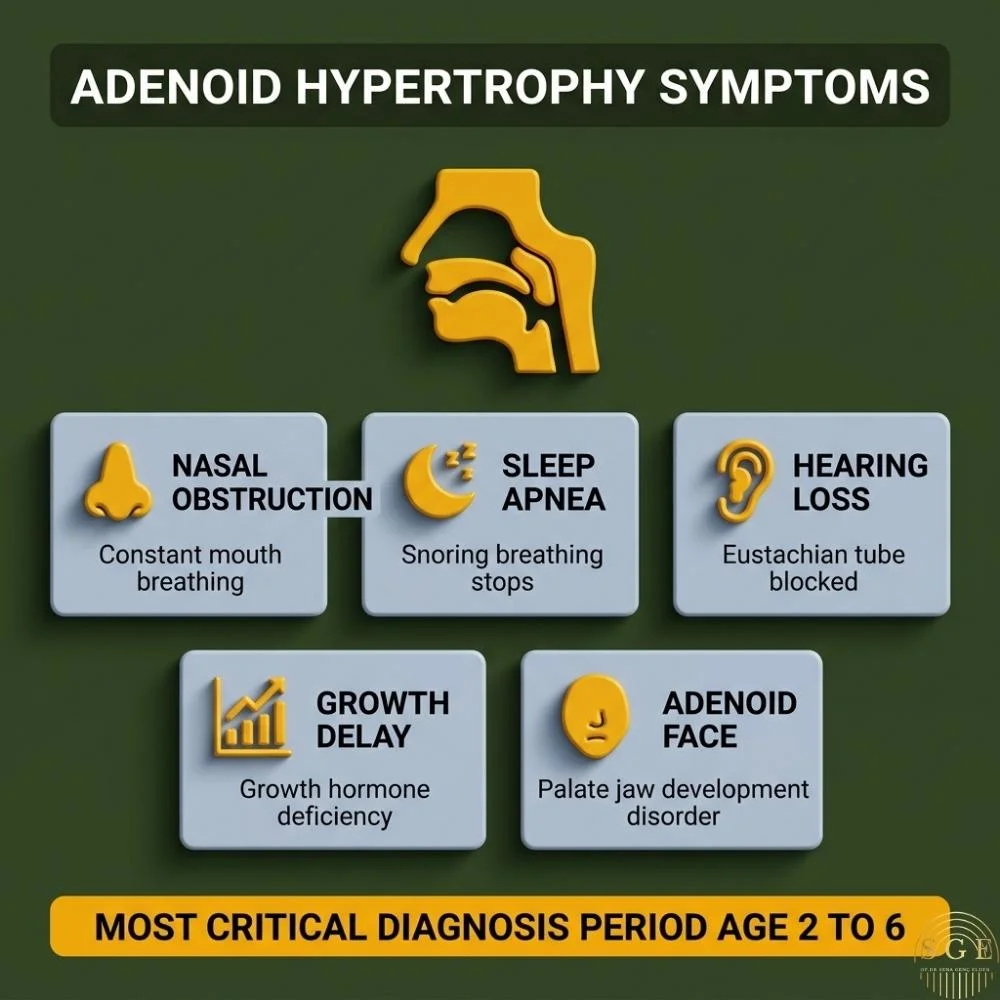
Primary symptoms indicating adenoid hypertrophy in your child:
- Chronic Nasal Congestion: The child constantly breathes through their mouth, even during the day.
- Sleep Problems: Severe snoring, sweating during sleep, constantly tossing and turning in bed, and the most dangerous of all, Sleep Apnea (breathing stopping for 10-15 seconds during sleep).
- Hearing Loss and Ear Infections: The adenoid blocking the “Eustachian Tube,” which connects the middle ear to the nasopharynx, resulting in fluid accumulation in the middle ear (Otitis Media with Effusion) and consequent hearing loss (turning the TV volume up too high, not hearing when called).
- Developmental Delay: Because quality sleep cannot be achieved, growth hormone (somatotropin) cannot be secreted sufficiently; this causes height and weight development to fall behind their peers.
- Adenoid Face: A permanent facial shape that develops due to breathing through the mouth for years, characterized by a high-arched palate, narrowing of the upper jaw forward, dental crowding, and an elongation of the lower part of the face, resulting in an “expressionless/dull” look.
Tonsil Diseases and Symptoms
Tonsils are located at the back of the mouth, on both sides of the base of the tongue. Tonsil disorders are basically examined in two main groups: Excessive enlargement (Hypertrophy) and Frequent Inflammation (Chronic Tonsillitis).
- Recurrent Tonsillitis (Acute Tonsillitis): These are bacterial (mostly Streptococcus) or viral infections characterized by high fever, difficulty swallowing, swelling in the neck lymph nodes, and fatigue, recurring more than 5-7 times a year. It necessitates constant antibiotic use.
- Tonsil Enlargement (Tonsillar Hypertrophy): This is when the tonsils mechanically block the airway and the entrance to the esophagus by reaching the level of “kissing tonsils,” even without any inflammation. It leads to the inability to swallow solid foods and sleep apnea.
- Tonsil Stones (Cryptic Tonsillitis): These are yellow/white colored, cheese-like stones usually seen in adults, formed by the filling of food residues and dead cells into the pits (crypts) on the tonsils, causing extremely bad breath (halitosis) and a constant feeling of a foreign body in the throat.
When is Surgery Decided? (Surgical Criteria)
The decision for surgery in adenoid and tonsil diseases is not made hastily; highly clear medical criteria accepted worldwide (Paradise Criteria) are applied. If one or more of the following conditions are present, surgical intervention (Adenoidectomy / Tonsillectomy) becomes a medical necessity:
Conditions Requiring Absolute Surgery (Absolute Indications):
Adenoid or tonsil size causing Sleep Apnea (cessation of breathing during sleep) (This is the most urgent reason for surgery).
Enlarged tissues causing swallowing difficulties (Dysphagia) and the child’s inability to gain weight (developmental delay).
The emergence of risks such as rheumatic fever, kidney inflammation (nephritis), or joint rheumatism due to tonsillitis (Strep infection).
The onset of permanent “Adenoid Face” development that disrupts jaw and tooth structure.
Fluid accumulation in the middle ear lasting longer than 3 months due to adenoids, causing hearing loss.
Relative Surgical Criteria (Relative Indications):
Tonsillitis recurring at least 7 times in the last 1 year, 5 times a year consecutively for the last 2 years, or 3 times a year consecutively for the last 3 years.
Chronic tonsil stones leading to bad breath and social isolation.
Drug allergies and weakened immunity developing due to continuous antibiotic use.

Modern Surgical Methods and the Treatment Process
Today, thanks to developing technology, adenoid and tonsil surgeries have become much more bloodless, painless, and faster-healing operations compared to past years. In our clinic, the most modern techniques suitable for the patient’s anatomical structure and age are applied:
1. Thermal Welding Method
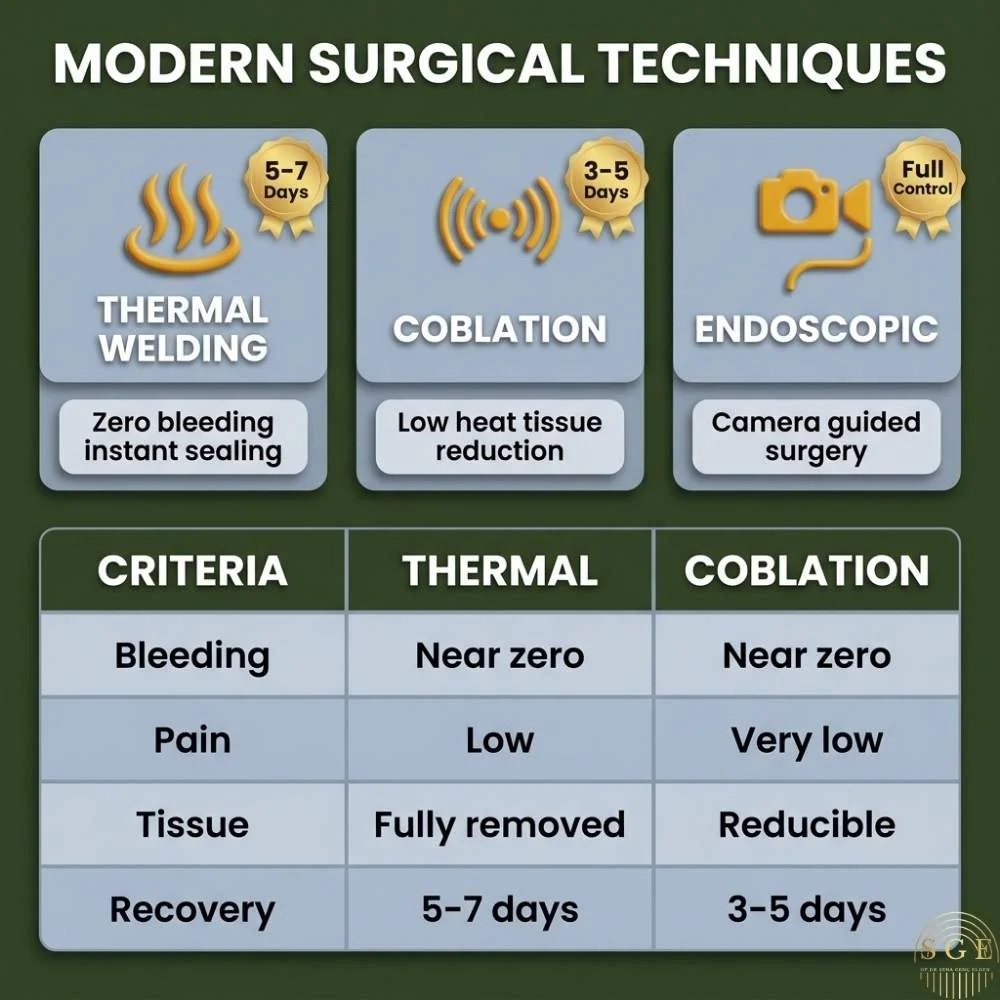
This is one of the latest technologies reached in tonsil surgeries today. Using heat and pressure energy, the tonsil tissue is stripped from the surrounding muscles and removed. Advantage: Since the vessels are sealed at the same time as the tissue is removed, the risk of bleeding is almost zero. No stitches are used. Because it does not cause heat damage to surrounding tissues (nerves and muscles), postoperative pain is much less than classic methods, and the recovery process is extremely fast.
2. Radiofrequency (Coblation) Technique
It is especially used in cases where the entire tonsil does not need to be removed (where shrinking only the part blocking the airway is sufficient) or in the cleaning of adenoids. The tissue is vaporized and shrunk at low heat with radio waves and a saline solution. Advantage: Because the capsule of the tonsil remains in place, the muscles are not exposed; this reduces postoperative pain to an almost non-existent level.
3. Endoscopic Adenoid Surgery
In classic methods, the adenoid was removed blindly through the mouth by curetting (scraping). In our clinic, adenoid surgeries are performed by entering through the nose with a camera (endoscope), seeing, and in a fully controlled manner. The tissue is cleaned millimetrically with special instruments (shavers), so no tissue is left behind and the risk of adenoid recurrence is eliminated.
Comparative Table: Tonsil Surgery Techniques
| Criteria | Classic Method (Cold Steel) | Thermal Welding (Heat/Pressure) | Coblation (Radiofrequency) |
| Bleeding Risk | Present (Requires stitching or cautery) | Almost zero (Instant sealing) | Almost zero |
| Post-Operative Pain | High (Open wound is formed) | Low – Medium | Very Low |
| Tissue Removal Status | Completely removed with its capsule | Completely removed with its capsule | Completely removed or shrunk as desired |
| Recovery Time | 10 – 14 Days | 5 – 7 Days | 3 – 5 Days |
Step-by-Step Operation and Recovery Process
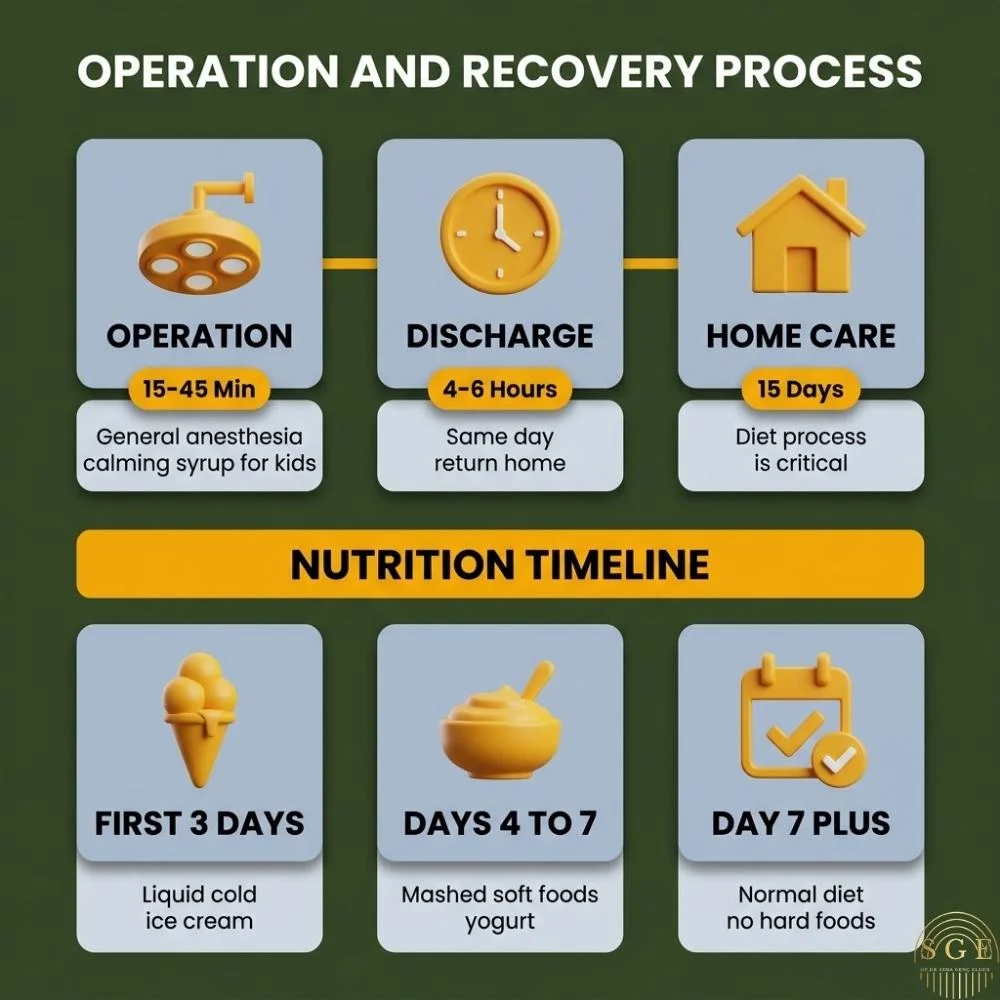
1. Operation Phase: Adenoid and tonsil surgeries are performed entirely under general anesthesia (the patient is put to sleep). To prevent our child patients from experiencing psychological trauma, they are given special “courage syrups” (sedatives) before being taken to the operating room; thus, they do not remember the operating room. If the operation is only for adenoids, it takes 15-20 minutes; if tonsils are also included, it takes about 30-45 minutes.
2. Discharge: After surgery, our patients are generally kept under observation in our clinic for about 4-6 hours. If the general condition of the child/patient is good, they have started oral fluid intake, and there are no complications, they are discharged and sent home on the evening of the same day.
3. Home Care and Nutrition Process (Importance of the Tonsil Diet): The most critical process after tonsil surgery is nutrition. Since the surgical area is in the throat, foods must not irritate the throat.
- First 3 Days: Only liquid, lukewarm, or cold foods should be consumed. The “golden rule” of this period is eating ice cream! Plenty of plain ice cream, cold milk, lukewarm meat/chicken broth soup (without pieces), cold compote, and pudding are given. Acidic (orange juice, cola, etc.) and red-colored drinks (so as not to be confused with bleeding) are strictly prohibited.
- Days 4-7: A transition is made to soft, puree-consistency foods (mashed potatoes, lukewarm pasta, yogurt, soft-boiled eggs).
- After the 7th Day: A gradual return to a normal diet begins, but for the first 15 days, hard and sharp foods like chips, shelled nuts, and toasted bread should be avoided. (Note: Patients who only had their adenoids removed do not follow this strict diet; they can return to normal nutrition the next day).
Frequently Asked Questions (FAQ)
You can quickly access answers to the most common questions and find detailed information about the treatment process here.
Does removing the tonsils and adenoids weaken the immune system?
This is parents’ biggest concern and a medical urban legend. There are hundreds of different lymphatic tissues (defense outposts) around the neck, respiratory, and digestive systems that produce immune antibodies in our body. Removing a diseased tonsil/adenoid that has lost its function and chronically produces microbes does not weaken the body’s defense; on the contrary, it strengthens the child’s overall immunity by preventing them from being constantly sick.
Is there an age limit for adenoid and tonsil surgery?
There is no strict upper age limit for the surgery; it is frequently performed on adults as well. As a lower age limit, it is generally preferred that the child has reached the age of 3 and a certain weight for anatomical and anesthesia safety. However, if the situation is very urgent (for example, if there is severe sleep apnea and the child is suffocating), these surgeries can be safely performed on a 2-year-old child as a life-saving measure.
Do adenoids grow back after surgery?
In older surgeries performed with the classic (scraping) method, there was a rare chance (5-10%) of the adenoids recurring because tissue was left behind. However, with the “Endoscopic” (camera-assisted) method we apply today, the tissue is seen visually and completely cleaned millimetrically, making the risk of regrowth almost impossible. Anatomically, there is no possibility of tonsils growing back after surgery.
When can my child return to school/daycare after surgery?
Generally, the first 1 week after surgery is recommended as a resting period. Children who only had adenoid surgery can return to their normal lives within 3-4 days, but if tonsil surgery is also included, returning to school should be planned for the 2nd week, as full recovery and transition to normal nutrition take about 7-10 days. Furthermore, it is important to keep the child away from crowded environments for the first 10 days to protect them from infections.

Op. Dr. Sena Genç Elden
Otolaryngologist (ENT Specialist)
Op. Dr. Sena Genç Elden, following her medical and residency training, completed Facial Plastic Surgery School and gained experience as a chief physician; she possesses national and international clinical expertise alongside world-renowned surgeons and currently continues her practice at her own private clinic in Serdivan, Sakarya.
Take the First Step for a New Beginning!
Address:
Contact Us
Mail: info@drsenagencelden.com
We Are by Your Side for Healthy Breathing, Uninterrupted Sleep, and Happy Growth
Your child’s inability to take a comfortable breath during the night, frequent infections, or your own recurrent sore throats do not have to reduce your quality of life. With the most advanced technological surgical methods (Thermal Welding, Endoscopic Surgery) that eliminate the risk of bleeding and minimize pain, we put a permanent and reliable end to these problems. To take a step toward a healthy future by taking a deep breath for both you and your child, you can immediately schedule your detailed endoscopic examination and treatment planning appointment.
References and Scientific Basis
Ensuring our patients and parents have transparent access to the most accurate medical information is our primary priority. The indications and surgical data in this guide have been prepared based on the protocols of the following internationally respected health organizations:
International Clinical Guidelines;
American Academy of Otolaryngology-Head and Neck Surgery (AAO-HNS): Clinical Practice Guideline: Tonsillectomy in Children.
Mayo Clinic: Tonsillectomy – Why it’s done, Risks, and Recovery.
Cleveland Clinic: Adenoidectomy: Procedure Details and What to Expect.
Academic Publications (Surgeon Dr. Sena Genç Elden) ;
- Elden, S. G., et al. (2024). Diagnostic Value of the Video Head Impulse Test in Patients with Vertigo: Can It Be Used as a Screening Tool? ResearchGate
- Elden, S. G., & Güven, E. M. The Effect of Hypericum Perforatum L. (St. John’s Wort) on Prevention of Myringosclerosis After Myringotomy. ResearchGate
- Genç Elden, S., & Demir, D. Investigation of diclofenac sodium’s ototoxic and neurotoxic effects on the rat model. ResearchGate