


Facelift (Rhytidectomy)
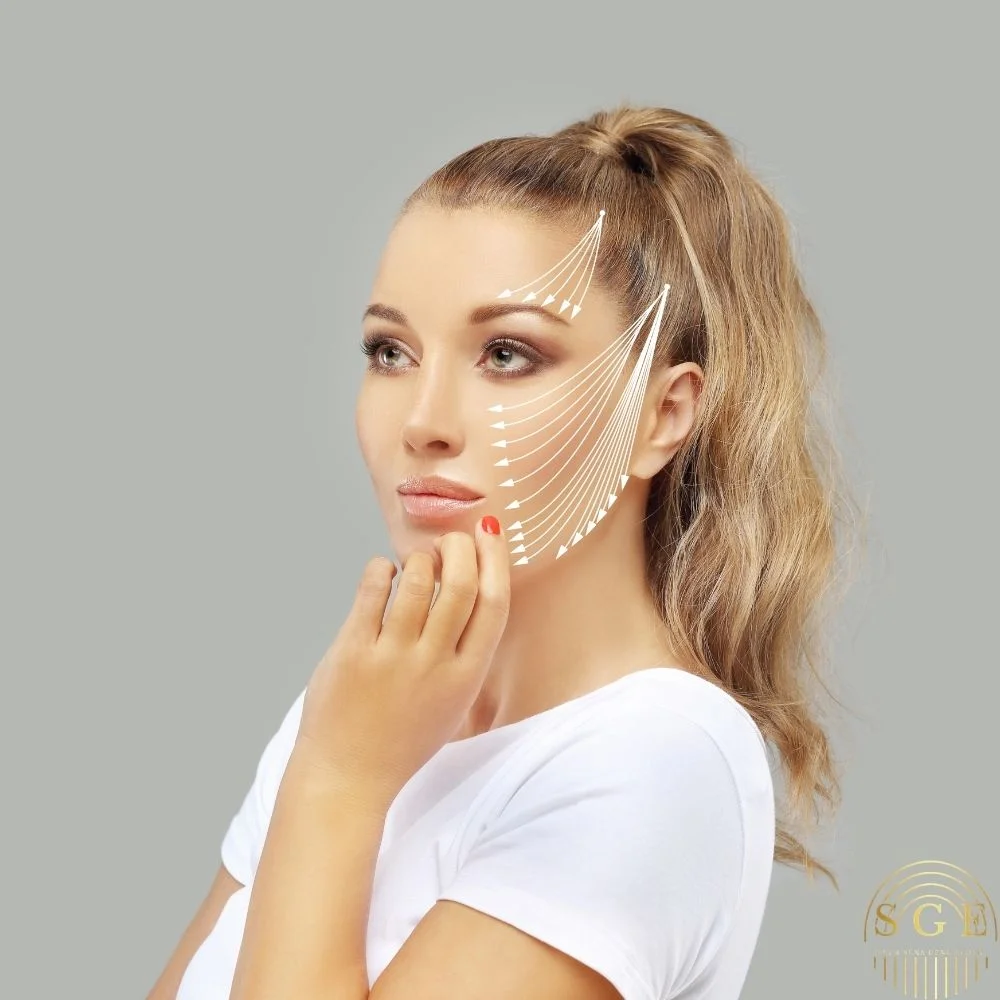
While the progression of time, gained experiences, and maturity are among life’s most valuable assets, the physical traces left on our faces by the years may not always align with our inner energy. When the relentless effect of gravity, the decrease in collagen and elastin production, harmful sun rays, and the stress of daily life combine, the tissues in the facial area gradually lose their elasticity and begin to sag downward. The facelift surgery, referred to in medical literature as Rhytidectomy, is the most effective and permanent surgical procedure that eliminates sagging, deep wrinkles, and volume loss in the face and neck area, restoring the dynamic, natural, and refreshed appearance of years past that reflects the person’s inner vitality.
The “wind-blown,” artificial looks with lost facial expressions and overly tight skin, often encountered in the aesthetic understanding of past years, are completely a thing of the past with modern aesthetic surgery techniques. In the advanced facelift surgery we apply today, our fundamental philosophy is not just to pull the skin sideways and stretch it, but to release the underlying sagging main carrier muscle and fat tissues (the SMAS layer) and anatomically reposition them back to their youthful positions. This way, your facial expressions and characteristic features never change; time is simply turned back for you.
Why and How Does Our Face Age? The Anatomical Process
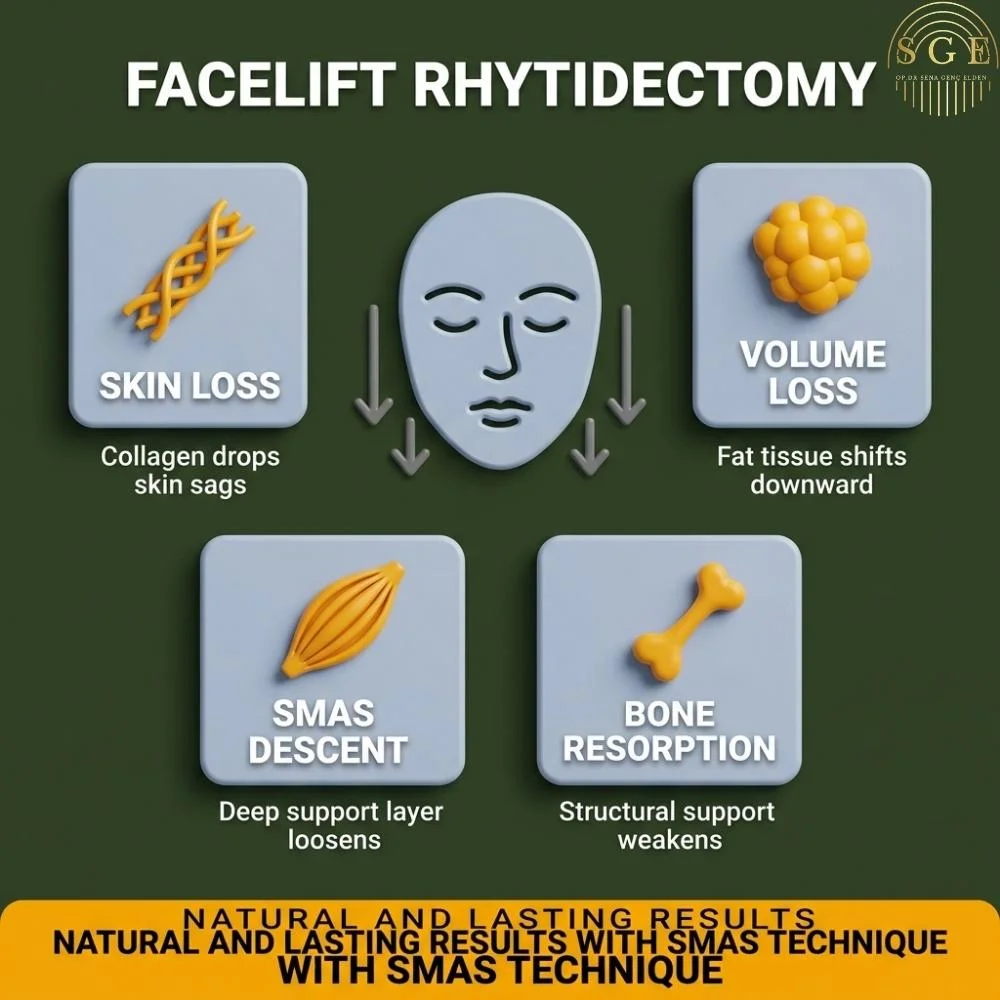
To fully understand the logic of facelift surgery, one must know how the face ages. Aging is not just the wrinkling or spotting of the skin; it is a three-dimensional, multi-layered anatomical process of descent:
- Decline in Skin Quality: Starting in the late 20s, elastin fibers that give the skin flexibility and collagen fibers that provide plumpness begin to decrease. The skin thins, dries out, and becomes unable to resist gravity.
- Volume (Fat) Loss and Displacement: In a young face, fat pads are fully positioned on the cheekbones and mid-face, but as age progresses, these fat tissues deplete and shift downward toward the jawline (jowls) with gravity. The “inverted triangle” facial shape of youth transforms into a “square” or “rectangular” form with a heavier base in older age.
- Sagging of the SMAS Layer: The deep carrier layer called the “Superficial Musculoaponeurotic System” (SMAS), which envelops the facial muscles and fasciae and allows us to make facial expressions, loosens over time. The real culprit behind that tired and sunken look on the face is not the skin, but the downward sagging of this deep SMAS layer.
- Bone Resorption: In advanced ages, the cheekbones and jawbone lose volume and shrink, which causes the soft tissues above them to lose their support and sag even more.
When is Facelift Surgery Needed? Who is an Ideal Candidate?
Facelift surgery is the gold standard treatment method in situations where non-surgical medical aesthetic procedures (fillers, thread lifts, energy-based devices) are no longer sufficient and significant tissue sagging has begun. For the surgery, the degree of aging signs on the face is more decisive than chronological age. (Generally, the period between ages 45-65 is when most applications are received).
Individuals with the following signs are ideal candidates for a facelift:
- Sagging of the cheeks downward from the mid-face and loss of fullness in the cheekbones.
- Deepening of the deep grooves descending from the sides of the nose to the corners of the mouth (Nasolabial folds) and the lines descending from the corners of the lips to the chin (Marionette lines).
- Deterioration of the jawline contour, formation of accumulations known as “bulldog” cheeks (jowls) at the edges of the jaw.
- Skin loosening in the neck area, horizontal wrinkles, fat accumulation (double chin), or the emergence of vertical muscle bands (turkey neck appearance).
- The person must be in good general health, have no chronic conditions that would prevent receiving anesthesia, and be a non-smoker (or possess the willpower to quit completely during the pre- and post-operative period).

Modern Facelift Techniques
Every patient’s anatomy, aging type, and degree of tissue deformation are as unique as a fingerprint. Therefore, the era of “one-size-fits-all surgery” is over. In our clinic, the most advanced and reliable techniques accepted worldwide are applied according to the patient’s needs following a detailed examination:
1. Mini Facelift (MACS Lift / Short Scar Facelift)
It is ideal for patients who are in their early 40s, do not have severe sagging in the neck area, but have mild to moderate loosening starting in the cheeks and jawline. The incision scar is limited only to the natural crease in front of the ear; it does not extend behind the ear. The recovery process is much shorter compared to classic methods. A fresh look is achieved with a light touch.
2. Classic (SMAS) Facelift
This is the standard approach applied for patients in their 50s and older with more pronounced signs of aging. Not only the skin but also the underlying main carrier facial muscle layer (SMAS) is pulled upward and suspended. The incision starts from the temple area (inside the hair), continues through the natural crease in front of the ear, turns behind the ear, and ends in the scalp. Both the face and the jawline are contoured, and the results are long-lasting.
3. Deep Plane Facelift
This technique is currently accepted as the absolute pinnacle reached by modern aesthetic surgery. In this method, the skin and subcutaneous tissue are not separated from each other at all; the surgeon goes directly beneath the SMAS layer and facial retaining ligaments, moving the entire face as a block (along with muscle and fat tissue) up to its youthful position. Its biggest advantage: Since it creates absolutely no tension on the skin, facial expressions remain 100% natural, scars heal flawlessly because they are not stretched, and its effect on the mid-face area (cheekbones and nasolabial folds) is far greater than all other methods. It is the technique with the most natural and long-lasting results.
4. Neck Lift (Platysmaplasty)
It is most often applied as an inseparable whole simultaneously with facelift surgery. The sagging platysma muscle in the neck is tightened and stitched together like a corset in the midline, excess fat tissue (double chin) is removed with liposuction if present, and the neck skin is pulled toward the back of the ear to remove the excess. A sharp and youthful jaw/neck angle is created.
Comparative Table: Facelift Techniques
The table below summarizes the fundamental differences of the applied methods and which situations they are suitable for:
| Technique | Suitable Patient Profile | Incision / Scar Size | Tissue Intervened | Recovery Time | Longevity |
| Mini Facelift | 40-50s, mild cheek/jaw sagging, no neck sagging | Short Scar (Only in front of ear) | Limited SMAS tightening | Fast (1 Week) | 5 – 8 Years |
| Classic (SMAS) Lift | 50+ age, pronounced facial sagging, jowl formation | Temple, front of ear, and behind ear | SMAS layer (Subcutaneous) | Standard (10-14 Days) | 10 – 12 Years |
| Deep Plane Lift | Mid-face hollowing, severe aging, seeking max naturalness | Temple, front of ear, and behind ear | Release of ligaments, en-bloc repositioning | Standard (10-14 Days) | Very Long (12-15+ Yrs) |

Step-by-Step Treatment and Recovery Process
A facelift is a serious surgical procedure; however, with proper planning and patient compliance, it offers an extremely comfortable recovery process.
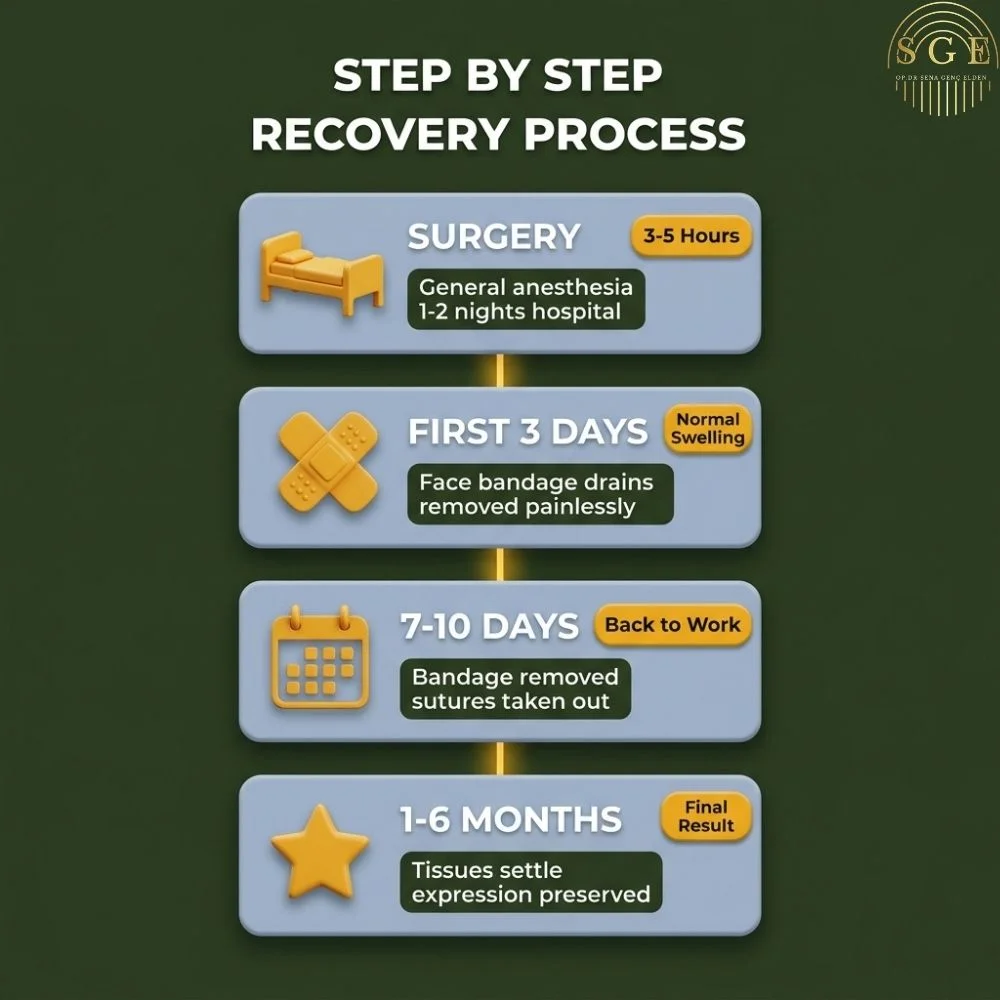
1. Surgical Intervention and Hospital Process: The operation is performed in a fully equipped hospital under general anesthesia (while the patient is completely asleep). Depending on the scope of the technique to be applied and accompanying procedures (such as eyelid surgery or fat injection to the face), the operation takes between 3 to 5 hours. At the end of the surgery, a special facial bandage (corset) that wraps and protects the face and suppresses edema is applied, and thin silicone drains may be placed to prevent blood/fluid accumulation under the skin. Our patients are usually hosted in the hospital for 1 or 2 nights for comfortable monitoring.
2. Discharge and First Days (0-3 Days): The first 48 hours after surgery is the period when swelling (edema) and bruising are most intense. This is perfectly normal. Contrary to popular belief, pain is minimal and easily subsides with prescribed painkillers; patients feel a sense of “tightness and numbness” in their faces rather than pain. Drains (if placed) are removed completely painlessly 1-2 days after the surgery. Keeping the head elevated with 2-3 pillows while lying down accelerates the reduction of edema.
3. End of the First Week (7-10 Days): During the clinical check-up, the facial bandage is removed, and facial stitches (those that need to be removed) are taken out painlessly. Staples in the hair or dissolvable stitches may remain a bit longer. Bruises start to turn yellow and fade during this period. Although most of the swelling has decreased, your face has not yet taken its full shape. Most patients can easily return to their desk jobs and social lives starting from the 10th day by applying light makeup.
4. Final Result and Long Term (1-6 Months): It takes time for the tissues to fully “settle” and heal in facelift surgery. By the end of the 1st month, the results are highly satisfactory, and the face has gained a natural vitality. However, for the numbness around the ears to completely pass, for the fine suture scars to turn into skin color and become invisible, and for the millimetric adaptation of the tissues, it takes about 6 months. In the final result; a rejuvenated face emerges where scars are hidden, fatigue is erased, but the expression is entirely yours.
Frequently Asked Questions (FAQ)
You can quickly access answers to the most common questions and find detailed information about the treatment process here.
Will there be a scar after facelift surgery, will it be noticeable?
In modern facelift surgeries, incisions are hidden in the natural anatomical folds of the face. Incisions hidden inside the hair in the temple area, behind the cartilage fold (tragus) just in front of the ear, and in the groove behind the ear turn into a fine, pale line after wound healing is complete (within an average of 6 months – 1 year) and cannot be noticed from the outside unless looked at carefully or a magnifying glass is used. The scars placed behind the ear are already invisible when the hair is down.
Will my facial expressions disappear or will my face look artificial, like "wind-blown"?
In the past, because only the skin was pulled from the outside, those undesirable artificial looks could occur. Today (especially in Deep Plane and SMAS techniques), the lifting and repositioning process is applied only to the carrier muscle layers located under the skin. The skin is simply draped gently over the new tissue; there is absolutely no tension on the skin. Thanks to this technique, your facial expression, smile, and all your mimics remain 100% natural, you just look younger.
How many years does the effect of facelift surgery last, does it stop aging?
No surgical procedure can stop the biological aging clock, because our body continues to age at the cellular level. However, a facelift turns this clock back 10 to 15 years. Even 15 years after the surgery, you will look much younger and more vibrant than your pre-surgery self. The duration of the effect varies between 10 and 15 years depending on the technique (Deep Plane is more permanent), your genetic makeup, skin quality, smoking habits, and sun protection habits.
Can non-surgical facelift devices (HIFU, Microneedling, Thread Lifts) replace surgery?
No, absolutely not. Energy-based medical devices, thread lifts (French lift, etc.), or filler applications are wonderful “preventative” (anti-aging) and “delaying” methods that support skin tightening. They only work for very mild skin looseness in the 30s and 40s. However, when tissue sagging passes a certain level and anatomical ligaments weaken, there is no device or non-surgical procedure that can replace surgery. In fact, excessive filler applications done to camouflage sagging tissue can add extra weight to the face, accelerating sagging and causing that undesirable “pillow face” appearance.
Can facelift surgery be combined with other aesthetic surgeries?
Yes, it is very frequently combined to provide perfect and holistic rejuvenation. Since aging is holistic in middle-aged and older patients, facelift is often performed in the same session with Eyelid Surgery (Blepharoplasty), Neck Lift, Brow Lift (Temple Lift), and Stem Cell Enriched Fat Injection (Fat Grafting) to replace the lost volume in the face.
Op. Dr. Sena Genç Elden
Otolaryngologist (ENT Specialist)
Op. Dr. Sena Genç Elden, following her medical and residency training, completed Facial Plastic Surgery School and gained experience as a chief physician; she possesses national and international clinical expertise alongside world-renowned surgeons and currently continues her practice at her own private clinic in Serdivan, Sakarya.
Take the First Step for a New Beginning!
Address:
Contact Us
Mail: info@drsenagencelden.com
Turn Back Time, Regain Your Natural Youth
If your reflection in the mirror no longer reflects that dynamic energy in your inner world, it means the time has come to initiate the change. Meet our modern facelift solutions that restore the natural vitality and lasting youth to your skin without ever disrupting your characteristic facial expression and mimics. You can schedule your detailed examination appointment right now to create your exclusively designed “holistic rejuvenation” plan and challenge the years.
References and Scientific Basis
We care about our patients accessing the most accurate and up-to-date medical information transparently. The anatomical information and surgical data in this guide have been prepared based on the protocols of the following internationally respected health organizations:
International Clinical Guidelines;
Mayo Clinic: Face-lift – Overview, Risks, Procedure Details and Results.
American Society of Plastic Surgeons (ASPS): Facelift Surgery (Rhytidectomy) Procedure & Recovery.
Cleveland Clinic: Facelift (Rhytidectomy) Medical Details and What to Expect.
Academic Publications (Surgeon Dr. Sena Genç Elden) ;
- Elden, S. G., et al. (2024). Diagnostic Value of the Video Head Impulse Test in Patients with Vertigo: Can It Be Used as a Screening Tool? ResearchGate
- Elden, S. G., & Güven, E. M. The Effect of Hypericum Perforatum L. (St. John’s Wort) on Prevention of Myringosclerosis After Myringotomy. ResearchGate
- Genç Elden, S., & Demir, D. Investigation of diclofenac sodium’s ototoxic and neurotoxic effects on the rat model. ResearchGate